
Pasta Machine
Lumos Games Teknoloji Yazılım Ve Pazarlama A.Ş.Arcade
3.3579.00 Reviews
- Version
- 2.4.0
- Installs
- 1.00M
- Age Rating
- Everyone
Screenshots


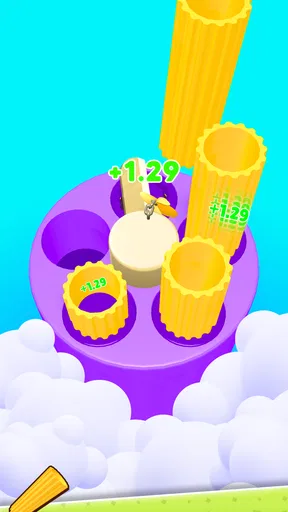
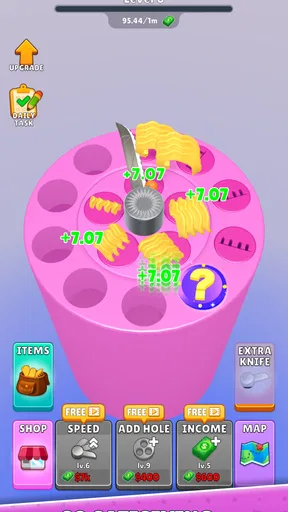


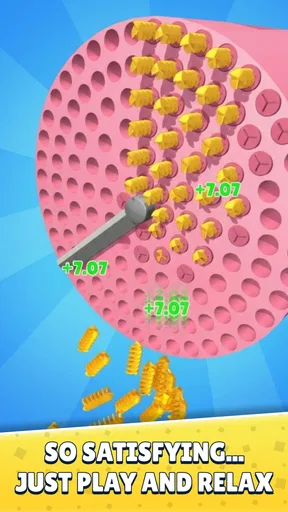

Our Review of Pasta Machine
 Analysis by Appyee
I found Pasta Machine appealing for a very specific reason: it turns one simple arcade action into a short, tactile challenge. The idea is easy to understand from the first tap, but getting a clean, fast result still asks for attention. You work with pasta, cut it as efficiently as possible, and try to improve your timing. I would not describe it as a deep cooking simulation. It is closer to a compact reflex game that uses a familiar kitchen theme to make repeated short sessions feel satisfying.
That distinction matters before you install it. If you want recipes, ingredient management, realistic preparation, or a long progression system, this is not the right kind of game. If you want something you can open while waiting for a bus, during a short break, or when you need a quick distraction without learning complicated rules, it makes much more sense. I could understand the basic goal immediately, and the game’s strongest quality is that it does not make the first few minutes feel like homework.
What the game feels like when you first open it
Pasta Machine is a free arcade game from Lumos Games Teknoloji Yazılım Ve Pazarlama A.Ş. It is aimed at Everyone, so its presentation and central interaction are accessible to a broad audience. The game was released on September 26, 2022, and its current version is 2.4.0. It has passed the one-million-install mark and holds an average rating of 3.3 from around twelve thousand ratings, which suggests that the concept attracts plenty of curiosity but does not satisfy every player equally.
My first impression was that the game is built around immediacy rather than explanation. You are not asked to memorize a large set of controls or understand a complicated economy before playing. The pasta-cutting premise gives you a clear visual objective, and the arcade format encourages you to try again quickly after a less-than-perfect attempt. That loop is the main attraction: start, react, finish the task, and decide whether you can do it more cleanly next time.
The best way to approach it is to treat each round as a timing exercise, not as a genuine kitchen task. The food theme gives the action personality, but the useful skills are observation, rhythm, and controlled movement. I found that expectation helped me enjoy it more. Players who judge it as a miniature cooking game may find it too narrow, while players who see it as a casual reflex challenge will understand where its entertainment comes from.
Because the game is free, trying it costs nothing at the initial download stage. There are in-app purchases ranging from $1.99 to $99.99 per item, so I would recommend spending time with the basic loop before considering any purchase. A free arcade game should earn your interest through play first. In this case, the important question is not whether the premise sounds amusing; it is whether repeating the cutting action remains enjoyable after the novelty of the pasta theme fades.
Getting through the first setup without overthinking it
The first-time setup is refreshingly straightforward from a player’s point of view. Once the game is ready, I would resist the temptation to search for a perfect strategy immediately. Start by watching the whole play area for a moment. Notice where the pasta appears, where the cutting action needs to happen, and how the game visually signals a successful interaction. The goal of this first attempt is not a high result. It is to learn the relationship between what you see and when you act.
That small pause is useful because the game’s simplicity can be deceptive. When there are only a few visible elements, players often tap too quickly and assume the controls are imprecise. In my experience, the more likely problem is rushing before the target and timing are clear. Let the first round teach you the pace. After that, you can begin adjusting your movement instead of reacting blindly.
I also suggest playing the opening attempt with the phone held comfortably and your finger positioned where it will not block the important visual area. This is a small practical detail, but it matters in a game where a fraction of a second can affect the result. If your hand covers the action zone, you may mistake poor visibility for poor control. A stable grip is more useful here than frantic tapping.
Another sensible first step is to decide what kind of session you want. For a relaxed break, simply complete the action and enjoy the visual feedback. For improvement, repeat the same task with one goal at a time: first learn the timing, then reduce hesitation, then try to make the movement smoother. Trying to improve everything simultaneously makes a very simple game feel more frustrating than it needs to be.
How to reach the first satisfying result
The first meaningful success comes when you stop treating the cut as a single hurried gesture and start reading it as a sequence. Look at the pasta, identify the point at which the interaction should happen, and commit to the action instead of making several nervous corrections. The game rewards attention more than complicated planning, so a calm approach is surprisingly effective.
My practical advice is to use the first few rounds as calibration. On the first attempt, focus on where your input lands. On the next, focus on when you begin the action. Then compare the result in your own mind. This creates a clear learning path even though the game itself is intentionally lightweight. You are not studying a large system; you are refining one physical habit.
A useful everyday scenario is a short waiting period at a coffee shop. You may have only a few minutes and may not want to begin a story-driven game that demands concentration or continuity. This is where the arcade structure works well. You can play one round, put the phone away, and return later without needing to remember characters, objectives, or a complicated map. The same applies to a brief break between tasks when you want active distraction rather than passive scrolling.
For younger players, the straightforward premise can make the first success feel approachable. For adults, the appeal is more about the small satisfaction of improving a repeated action. I would still supervise a child’s overall device use, but the Everyone rating fits the game’s broad, uncomplicated concept. It does not require knowledge of cooking, and the pasta theme is easy to understand even if the player has never played an arcade game like this before.
The important trade-off is that the first success arrives quickly, but that also means the game has to rely on your willingness to chase a better attempt. If you need a strong sense of discovery, the early achievement may not be enough to keep you engaged. If you enjoy shaving mistakes out of a familiar action, the same simplicity becomes the reason to continue.
Where new players can become confused
The most common confusion is likely to come from the difference between the visual theme and the actual genre. Seeing pasta can create the expectation of a cooking workflow, but this is an arcade game first. Do not wait for a complete meal-making process or a detailed kitchen routine. The central pleasure is the cut itself and the challenge of performing it effectively.
Another possible source of frustration is interpreting every imperfect result as a control problem. Before blaming the game, try changing one thing: slow down your initial reaction. In fast casual games, players often press as soon as an object appears, even when the correct moment is slightly later. A deliberate first attempt can reveal whether the issue is timing, positioning, or simply unfamiliarity with the feedback.
I would also avoid playing while distracted by several other tasks. The game is easy to learn, but that does not mean every round can be played successfully with half your attention. If you are walking, carrying something, or repeatedly looking away from the screen, your results will say more about the situation than the game. For the best experience, give it a short, focused window rather than trying to multitask through every attempt.
Players may also wonder whether the free version is enough to judge the game fairly. My answer is yes: spend several short sessions learning the core interaction before thinking about optional spending. The listed purchase range is wide, and a purchase cannot solve a basic mismatch between your tastes and the game’s repetitive arcade structure. If you already know that you dislike retry-based challenges, paying for anything will not change the central design.
The rating of 3.3 is worth reading as a warning about expectations rather than as an automatic verdict. A game can be easy to understand, widely installed, and still feel too limited for people seeking variety. I would not use the install count as proof that it will suit everyone. It tells me that the concept has broad reach; my own recommendation depends on whether you enjoy brief, repeatable actions more than elaborate content.
Small habits that make repeated rounds better
One non-obvious improvement is to separate accuracy practice from speed practice. At the beginning, aim for a clean action even if it feels slower. Once the movement becomes familiar, increase the pace. Starting with speed encourages rushed inputs, and rushed inputs make it harder to understand what went wrong. This two-stage approach gives each attempt a clear purpose.
A second useful habit is to keep your finger movement economical. Large gestures may feel energetic, but they can make it harder to land consistently. Try to use the smallest comfortable motion that still gives you a clear response. This is especially helpful during short sessions because it reduces fatigue and keeps the action repeatable. The game’s simplicity means small physical habits have a visible effect on how controlled your play feels.
Third, stop after a few frustrating attempts and return later. Because the rounds are short, it is tempting to keep retrying indefinitely, but repetition without attention quickly becomes noise. A brief pause can reset your timing and prevent the game from turning a casual break into an irritating one. I found that the title works best when I treat it as a small activity, not as a challenge that must be conquered in one sitting.
There is also a useful distinction between playing for relaxation and playing for mastery. For relaxation, accept an ordinary result and enjoy the satisfying action. For mastery, pay attention to the exact moment your input succeeds or fails. Mixing those goals can create unnecessary pressure. The game supports both moods, but you need to choose which one you want before each session.
How it compares with other casual arcade choices
Compared with a traditional endless runner, this game feels more contained. An endless runner usually asks you to maintain attention while the environment keeps moving and obstacles accumulate. Here, the pasta-cutting task gives the session a more focused shape. That makes it easier to fit into a short break, although it may offer less variety for players who enjoy changing environments and escalating hazards.
Compared with a cooking simulator, the difference is even clearer. A simulator may appeal to someone who wants planning, ingredients, preparation stages, and a sense of managing a kitchen. This game removes those layers and concentrates on a single arcade interaction. I would choose the pasta game for quick tactile entertainment, but I would choose a cooking-focused alternative when I wanted creativity, progression through recipes, or a more complete food-making fantasy.
It also differs from puzzle games that reward careful deduction. There is no need to build a long chain of reasoning before acting. Your improvement comes from timing and repetition rather than from discovering a hidden solution. That makes it easier to pick up, but it also means the experience may feel shallow if you prefer puzzles with many possible approaches.
For someone deciding between this and a more elaborate arcade title, the trade-off is convenience versus depth. The narrow concept is the reason you can understand it quickly, and it is also the reason you may eventually want another game alongside it. I would keep it as a lightweight option rather than expecting it to replace every other casual game on a phone.
Who will enjoy it, and who should skip it
I would recommend it to players who like short action loops, visual feedback, and the satisfaction of improving a familiar gesture. It is a good fit for a first-time arcade player because the premise does not require genre knowledge. It can also suit someone who wants a game that can be paused mentally between rounds instead of demanding a long uninterrupted session.
I would be more cautious recommending it to players who need a story, extensive customization, strategic depth, or a large variety of activities. The pasta theme is memorable, but it does not transform the game into a full cooking experience. If repetition makes you lose interest quickly, the initial novelty may not carry you very far. In that case, a puzzle game with evolving rules or an arcade game with multiple modes would probably be a better choice.
People who are sensitive to purchase prompts should also approach it carefully. Since optional items are available, I would make a personal rule before playing: enjoy the free core first and only consider spending if the game remains fun after the novelty wears off. That keeps the decision based on actual enjoyment rather than on the excitement of the first few rounds.
What to expect from the current version
The current version is 2.4.0, and the minimum operating system requirement is Android 7.0. That makes the game accessible to many older Android devices, although the actual comfort of play will still depend on the phone’s screen, responsiveness, and general condition. For a timing-focused arcade title, a device that responds consistently is more important than having a powerful phone.
If you are using an older device, I would test the opening rounds in a calm setting rather than judging immediately during a busy moment. A delayed touch response, a crowded screen, or an awkward grip can make a simple action feel unreliable. This is not unique to pasta-themed games, but it matters more when the entire experience is built around quick interaction.
The game is free to start and carries an Everyone content rating, which makes it easy to recommend as a low-commitment experiment for families and casual players. Still, I would explain to younger users that free installation does not mean every item inside the game is free. Setting that expectation early avoids confusion and keeps the experience focused on play.
After several sessions, the right next step is to decide whether you enjoy the improvement loop. Do you notice yourself becoming more accurate? Do you like trying again after a near miss? If yes, keep using short focused sessions and work on one timing habit at a time. If no, moving to a richer arcade or cooking game is sensible; the problem is probably the game’s narrow format, not your ability to learn it.
My final view is positive but measured. Pasta Machine is best understood as a quick reflex toy with a playful food theme, not as a complete cooking game. I like how quickly a first-time player can reach the main action, and I appreciate that a few minutes are enough to make the game worthwhile. Its limitations are equally clear: repetition can become thin, and players looking for deeper systems will outgrow it.
For me, it earns a place among casual time-fillers because the path from opening the game to making a satisfying first attempt is short and reassuring. I would install it when I wanted a simple challenge without a long tutorial or commitment. I would skip it when I was looking for narrative, strategy, or substantial variety. If that distinction matches what you want from an arcade game, the free download makes trying it a reasonable choice.
Verdict
Strengths of Pasta Machine
- Simple controls make it easy to start playing right away.
- Short levels are convenient for quick gaming sessions.
- Bright visuals make the pasta-making process fun to watch.
- Increasing challenges keep the gameplay from feeling repetitive.
- Works well for casual players looking for a relaxing experience.
Limitations of Pasta Machine
- Gameplay can become repetitive after extended play sessions.
- Some levels may feel too easy for experienced players.
- Progression may offer limited variety between stages.
- Ads can interrupt the experience, depending on the version.
- The game may not appeal to users seeking deep strategy or simulation.
Similar Picks in This Category
View All
Subway Surfers
SYBO Games4.6

Stickman Party 234 MiniGames
PlayMax Game Studio4.6

Subway Princess Runner
Ivy4.4

Temple Run
Imangi Studios4.2

Zombie Tsunami
Mobigame SAS4.6

Stack Ball - Crash Platforms
CASUAL AZUR GAMES4.5
Frequently Asked Questions
What is Pasta Machine, and how does the app work?
Pasta Machine is a cooking-focused app designed to help users prepare homemade pasta through guided instructions, recipe ideas, and practical preparation tips. After opening the app, you can explore different pasta styles, review ingredient lists, and follow the recommended steps for mixing, rolling, shaping, and cooking. It is intended for both beginners and home cooks who want a more structured way to make fresh pasta.
Does Pasta Machine include recipes for beginners?
Yes, Pasta Machine is suitable for beginners because its recipes generally explain the process in a clear, step-by-step format. The app can help you understand basic dough preparation, thickness, shaping, and cooking times without requiring professional kitchen experience. Even so, results may vary depending on flour type, humidity, equipment, and technique, so some patience and practice may be necessary when preparing your first batches.
Can I use Pasta Machine without an internet connection?
Offline availability may depend on the specific version of Pasta Machine and how its content is delivered. Some basic recipes or previously loaded instructions may remain accessible after they have been opened, while other features could require an internet connection. It is best to launch the app and check the recipes you need before cooking, especially if you plan to use it in a kitchen with weak or unavailable Wi-Fi.
Is Pasta Machine free to download, and does it contain in-app purchases?
Pasta Machine may be available as a free download, but the exact pricing model can vary according to the platform, region, and current developer updates. Some versions of cooking apps include advertising, optional premium content, or purchases that unlock additional recipes and tools. Before downloading, review the Google Play Store or Apple App Store listing carefully to confirm whether subscriptions, ads, or paid features are included.
Is Pasta Machine useful for experienced cooks as well as beginners?
Pasta Machine can also be useful for experienced cooks who want quick recipe references, fresh ideas, or reminders about proportions and preparation techniques. However, advanced users may find some explanations fairly basic if they already make pasta regularly. Its main value is convenience and organization rather than replacing personal culinary knowledge. Cooks who experiment with specialty flours or unusual shapes may need to adapt the instructions themselves.
Play our best games!


